What could a parenting book and a book about spontaneous public speaking have in common? Surprisingly, a lot.
Last month, I found myself reading both Good Inside, a parenting book by Dr. Becky Kennedy, and Think Faster, Talk Smarter, a book on spontaneous public speaking by Matt Abrahams. Every morning, before getting my three-year-old ready for school, I read a chapter of Good Inside, and every evening, after putting her to bed, I read a chapter of Think Faster, Talk Smarter. I hadn’t gotten far before I noticed that the two books went together far better than I could have imagined.
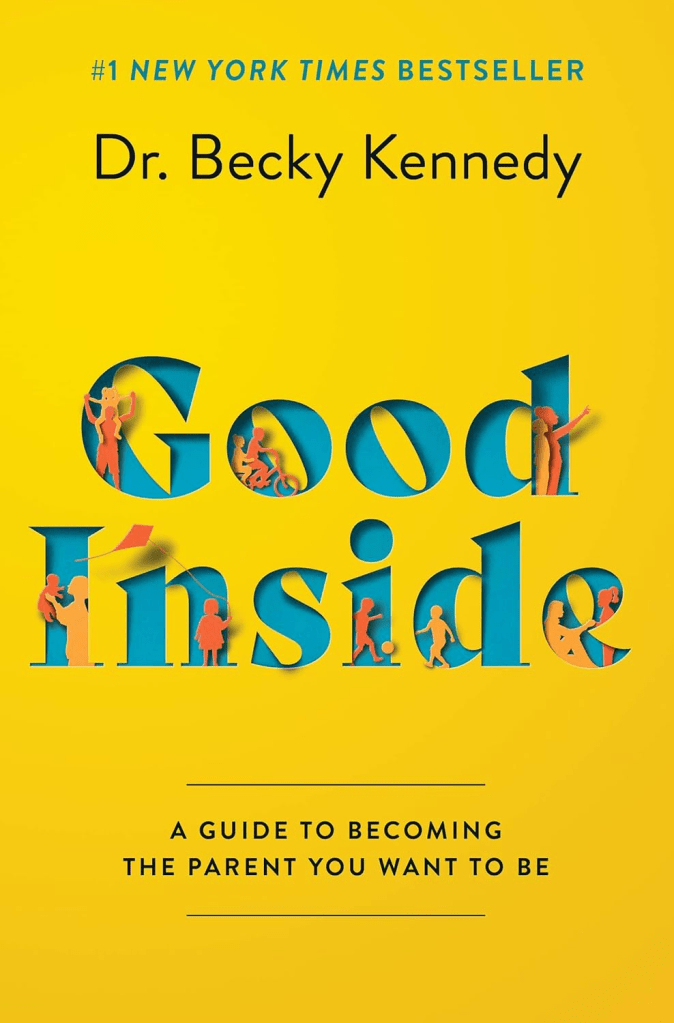
The basic premise of Good Inside is that kids (and parents) are, well, good inside. Dr. Becky (as she is known on her podcast) posits that “bad” behavior is a signal about a need or problem the child doesn’t know how to solve—they’re a good kid having a hard time. She suggests that, in the long term, we’re better off addressing the underlying need and helping the child develop emotional regulation skills rather than focusing too much on the behavior itself (while still holding clear and firm boundaries). Connection before correction.
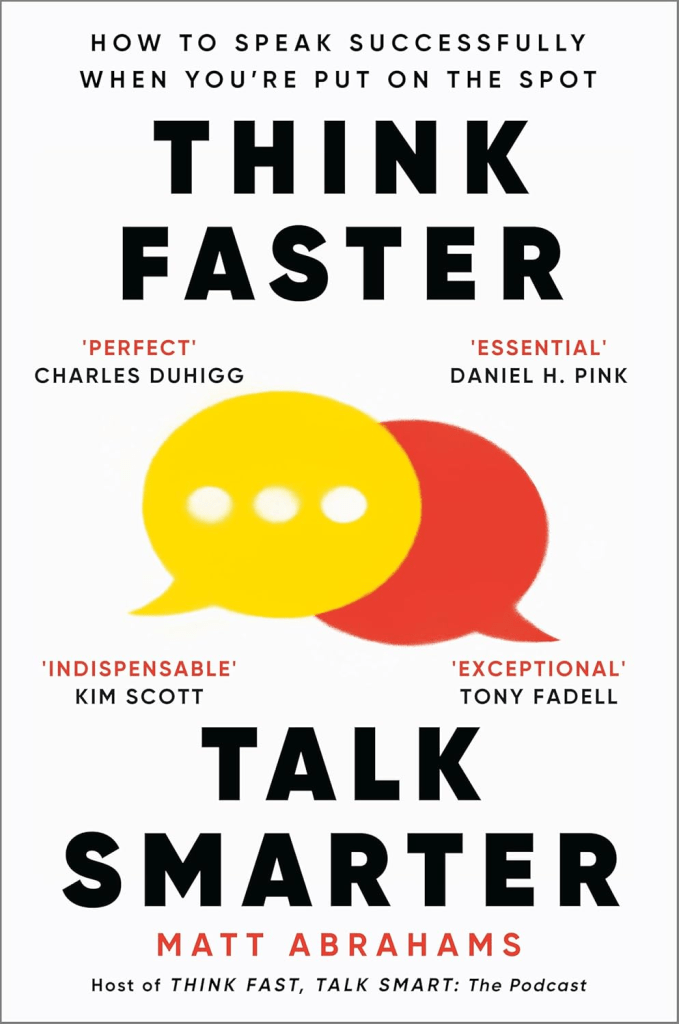
Think Faster, Talk Smarter is a guide to becoming a more confident public speaker in unrehearsed situations. Matt Abrahams (also a podcast host) explains that most of us get in our own way when it comes to public speaking. He offers suggestions for how to overcome the anxiety that many feel about speaking publicly, structures for organizing your ideas, and a reminder that we often focus too much on how we appear to others rather, treating something as a performance when it should really be a conversation. Connection over perfection.
Ultimately, both books describe how and why to communicate more effectively so that we can deepen our connection with our audience—whether that’s your child or your CEO.
Overlapping strategies
To that end, the books have similar structures; in each, the first half covers general principles, while the second half addresses specific situations. Both include structures or scripts that we can apply in these situations—for example, here’s how each book recommends approaching an apology*:
Good Inside
- Share that you’ve been reflecting
- Acknowledge the other person’s experience
- State what you would do differently next time
- Connect through curiosity now that things feel safer
Think Faster, Talk Smarter
- Acknowledge: Identify the offending behavior and take responsibility for it.
- Appreciate: Publicly accept how your offense has impacted others.
- Amends: Detail how you’ll make up for your offense (what you’ll do differently next time)
*Good Inside describes this as a “repair” and differentiates it from an apology of the simple “I’m sorry” variety; however, it’s very similar to the type of apology modeled in Think Faster, Talk Smarter.
Beyond connection and structure, it turns out that many of the same concepts that are useful in parenting—or something we want to teach our kids—are also helpful for public speaking, and so they’re covered in both books:
- Calming strategies such as mindfulness
- Overcoming perfectionism
- Welcoming and learning from mistakes
- Fixed vs. growth mindset
- Storytelling
Applying what I’ve learned
So far, I’ve found it easier to remember to apply the strategies from Good Inside. It helped that I was reading it in the morning, right before I woke up my three-year-old daughter to start getting her ready for school—an activity that’s almost guaranteed to present some kind of parenting challenge to practice on. I don’t always remember to apply the ideas from Think Faster, Talk Smarter in on-the-fly speaking situations, like small talk; however, I’ve found them helpful when preparing for meetings, especially when I anticipate that others will have questions for me.
Beyond that, I’ve realized that low-stakes opportunities to practice my spontaneous speaking skills are abundant in my interactions with my daughter. For example, she often asks me to tell her a story on the way to or from daycare, and, previously, I would usually try to get out of it. However, as I was reading these books, I realized that this was an opportunity to practice, and the next time she requested a story, I accepted the challenge. I thought about structures commonly used in stories—the rule of threes, the hero’s journey, and an example from improv that Abrahams includes in his book—and I took Abrahams’ advice to “maximize mediocrity.” I won’t be winning any prizes for children’s literature anytime soon, but my daughter enjoys the stories (especially the one about the turtle princess), and I’ve become a lot more comfortable making them up on the spot.
Finding connections
By reading these books alongside each other, I realized that being more intentional with my communication could make me a better parent, and that practicing these skills in my parenting could make me a better communicator. Beyond these direct applications, it left me feeling excited about the unexpected parallels and curious about where else I might find hidden connections.
Have you ever found a surprising synergy between two areas of your life? Is there a potential connection you’re eager to explore?
(Also, if you’re a parent, I highly recommend Good Inside because it kind of changed my life.)

 Caity Thinks